The Space between Black and Liberation

– By Breanna Bonner

What is intersectional invisibility?

Intersectional invisibility is the unique experience in which persons holding multiple identities( race, gender, religion, sexuality, ect) are further marginalized through social movements. 

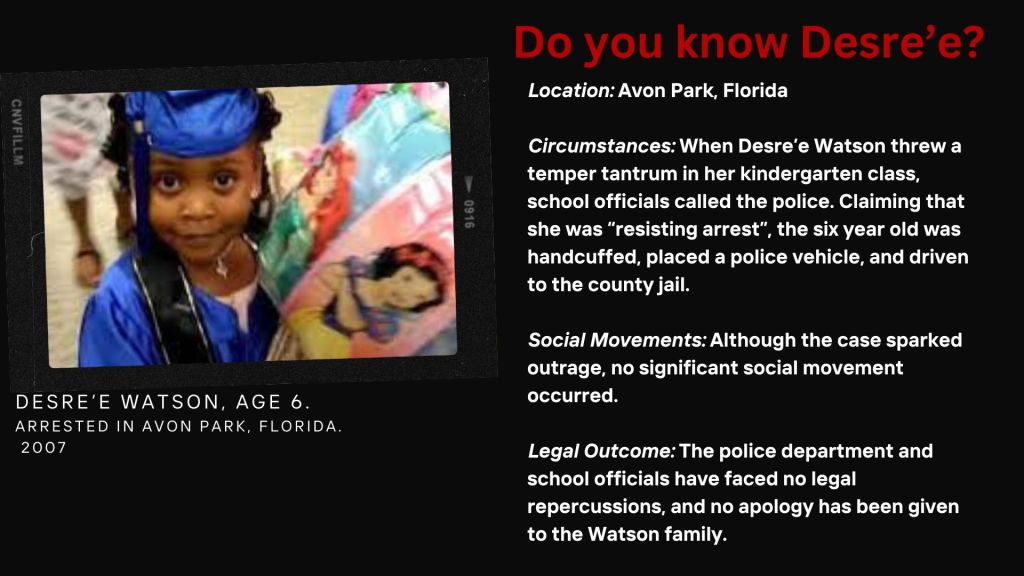
Desre’e Watson’s unjust arrest well illustrates the concept of intersectional invisibility. The harm- her arrest- was a result of systemic perception of her dual identities of Black and female. Black children are often perceived as threats and experience higher risks of encounters with the police, while girls often are over perceived as irrational and over-emotional. As Desre’e was a victim of gender-based and race-based discrimination, it would make sense that she would experience advocacy from both women’s movements and Black social movements. Instead, her story was largely forgotten and she has not received justice.

Why this matters

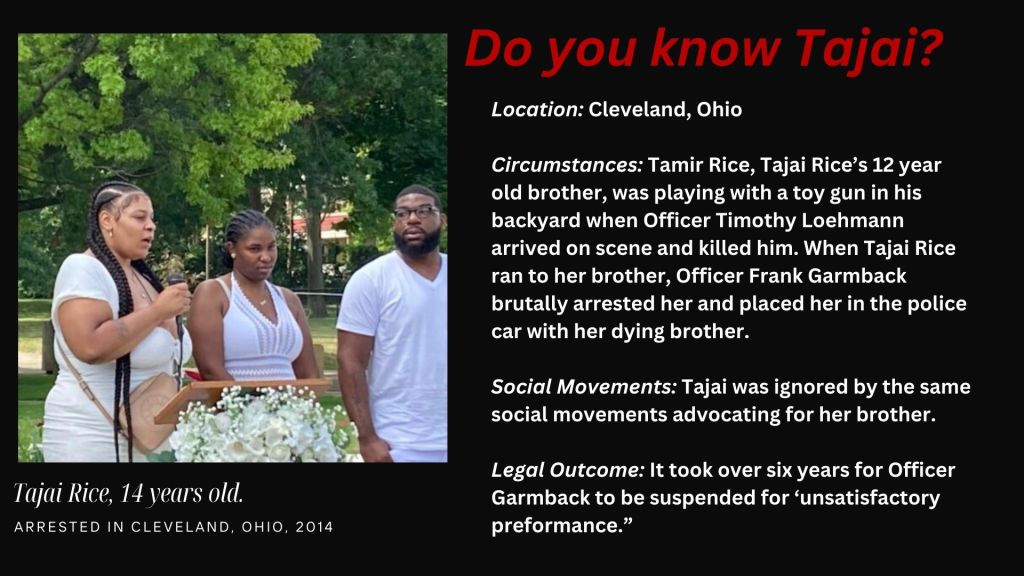
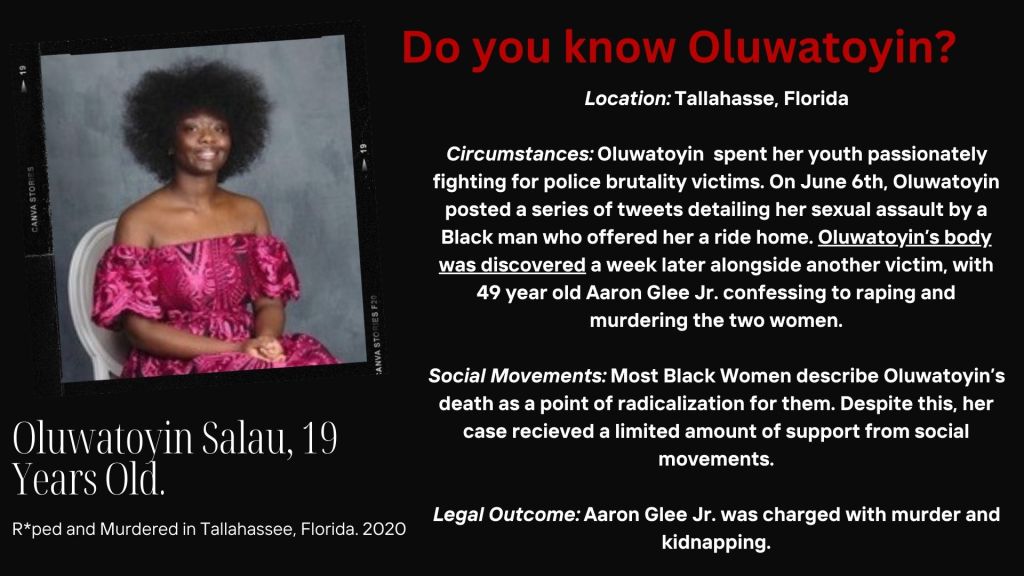
These four women and girls rest central to our understanding of intersectional invisibility. What is most troubling about their stories is that their experiences did not spark global outcry, even from social movements that should have advocated for them. Instead, these girls are erased from calls for police reforms, blamed for the harm they experienced, and left to move forward from their trauma largely on their own. Black women must not only fight in pursuit of legal justice; they must fight to be recognized as being victims of injustice by their communities and mass media. 

Ma’Khia and Oluwatoyin deserved to grow old just as much as their white female counterparts. Tajai Rice deserved to be recognized for the harm she suffered at the hands of police just as much as Tamir Rice. Desre’e deserved to be seen as a child and receive the same behavioral interventions as every other kindergarten student in her class. Understanding intersectional invisibility is key to working towards a future in which these girls are recognized and other Black girls can feel visible. 

By Breanna Bonner